
Scale Your Home Care Agency with Automation
Home Care, Systems, Automation, Business Growth
The Home Care Agency Owner's Guide
You did not start a home care agency to spend your days chasing leads, answering the same questions over and over, and wrestling with spreadsheets at midnight. You started because you care about people and you wanted to build something that creates dignified care and good jobs. Yet here you are, carrying the weight of every decision and every task on your own shoulders. If that feels heavy, you are not alone, and it is not because you are failing. It is because you are trying to run a growing agency without the systems that growth requires.
The Manual Work Trap: What You Are Still Doing by Hand
Many home care agencies are quietly stuck in the same pattern. The phone rings, you jot notes on a pad, you promise to call back, then you jump into scheduling, payroll questions, and caregiver issues. By the time you look up, those notes are buried under a pile of paper. The interested family is waiting, or worse, they have already called another agency that followed up faster.
Tracking new inquiries on sticky notes or scattered spreadsheets instead of in one organized system.
Manually sending the same follow up emails and texts to every new lead instead of using templates and automation.
Calling caregivers one by one to fill shifts instead of using structured communication and scheduling tools.
Re entering the same information into multiple documents and systems, which increases errors and steals your time.
None of this means you are doing something wrong as a person. It simply means you are trying to run a modern agency with tools that belong to a smaller, simpler operation. Your overwhelm is a systems problem, not a character flaw or a lack of effort. You are working hard. The problem is that your systems are not working hard with you.
The Real Cost of Manual Work Beyond Just Time
It is easy to think, I am just busy, this is what running a business feels like. Yet the cost of doing everything manually reaches far beyond long days. It quietly limits the impact and income of your agency.
Missed leads. When follow up depends on your memory, or on a staff member who is already stretched, some inquiries will slip through the cracks. Families who are ready to start care often choose the agency that responds first and follows up consistently. Manual processes make that hard to guarantee.
Staff burnout. Your office team and schedulers feel the strain of repeating the same tasks all day. Caregivers feel the confusion when communication is rushed or unclear. People who care deeply about clients can start to feel drained and discouraged when chaos becomes the norm.
Slower growth. When every new client means more stress for you, your natural instinct is to hold back. You start to think, I cannot take on more until I hire three more people, or until I somehow find more hours in the day. Manual work quietly caps your growth because it ties revenue to your personal capacity.
The truth is that you are paying for manual work with your energy, your health, and your agency's potential. That is too high a price, especially when better options exist that respect your time and your mission.
What Automation Actually Looks Like for a Home Care Agency
Automation can sound technical or cold, yet in a home care agency it is really about creating reliable, caring routines that run in the background. Think of it as a set of helpful assistants that never forget, never get tired, and always follow the plan you designed.
When a new inquiry comes in, their information is captured in one place automatically, and a friendly email or text goes out right away to acknowledge them and share next steps.
A follow up sequence is triggered, so if they do not respond, the system sends a reminder, offers to answer questions, and nudges them toward a consultation without you having to remember each touch.
Caregivers receive schedule updates and shift confirmations through a consistent channel, which reduces back and forth calls and last minute surprises.
Simple check in messages go out to families at key points in the first weeks of service, so they feel supported and heard without requiring you to personally reach out every time.
None of this replaces the human heart of your agency. Instead, it protects it. Automation holds the routine tasks so that you and your team can focus on higher level conversations, complex situations, and genuine relationships with clients and caregivers.
Common Objections to Automation and Honest Responses
If you feel nervous about automation, that is completely understandable. Many agency owners share the same concerns, and each one deserves a thoughtful response.
Objection 1:I do not want my agency to feel cold or robotic. Automation should not replace your warmth. It should support it. A well designed system sends messages in your voice, with your values, at the right time. Families still talk to real people. They just no longer wait in silence for basic information.
Objection 2:I am not tech savvy, so I am afraid I will break something. You do not have to be the tech expert. Your job is to be clear about your process and your goals. A good partner translates that into systems for you, trains your team, and keeps it simple. You stay in control of the vision while the tools handle the details.
Objection 3:I cannot afford a big system right now. The real question is, how much is manual work already costing you in lost clients, turnover, and stress. You do not have to start with everything at once. You can begin with one or two high impact automations that quickly pay for themselves through better conversion and smoother operations.
Objection 4:My situation is unique. A generic system will not fit us. You are right that your agency is unique. That is why the best approach is not a cookie cutter app. It is a tailored system that reflects your intake process, your communication style, and your community. Custom does not have to mean complicated. It means intentional.
Life on the Other Side: When Systems Handle the Manual Work
Imagine starting your day with a clear dashboard that shows which leads came in overnight, which ones already received follow up, and which families are ready for a conversation. Your team knows the priorities. You are not digging through emails or trying to remember who called yesterday afternoon.
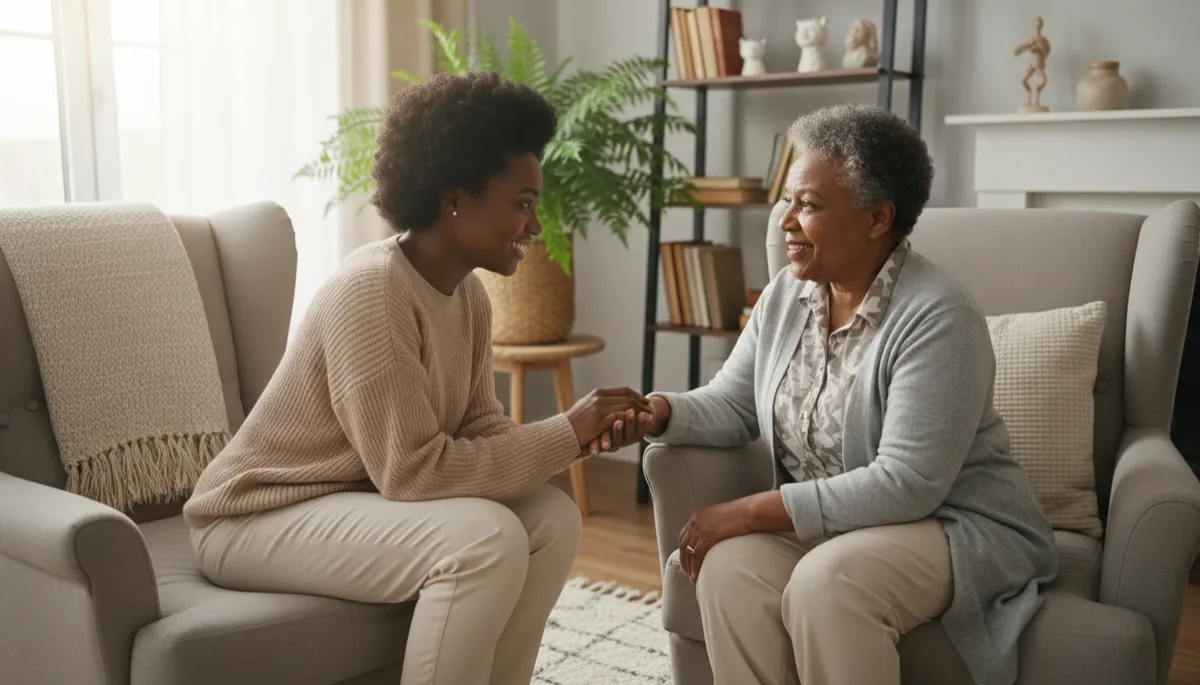
When systems support the business, caregivers can fully focus on human connection.
Your office staff is less frantic because they are not reinventing the wheel with every new inquiry. Caregivers receive consistent updates and reminders, so they feel informed and respected. Clients experience timely communication and steady care, which builds trust and referrals. You finally have space to think about strategy, partnerships, and the culture you want to build, instead of just putting out fires.
This is what it looks like when systems carry the repetitive work and your people carry the heart work. The same compassion that led you to start your agency can now be felt at every level because you are no longer buried in tasks that a smart system can easily handle.
You Deserve a Business That Works as Hard as You Do
Your exhaustion is not proof that you are not cut out for this. It is proof that you have been carrying more than any one person should. The systems problem is real, and it is fixable. You deserve a business that supports you, honors your vision, and grows without demanding every ounce of your energy in return.
Ready to stop doing manually what a smart system can handle for you? Book your free 20 minute strategy call at virtualmonarch.com and let us build the system your agency deserves.