Why Home Care Agencies Lose Patients Online
Home Care, Marketing, Intake
Why Home Care Agencies Are Losing Patients Before the First Phone Call
Families do not “shop” for home care the way they shop for a new pair of shoes. By the time someone is searching for help at home, they are tired, worried, and often juggling work, kids, and crisis-level decisions for someone they love. And today, most of those decisions are made online, before a single call ever reaches your office. The agency that shows up first, looks trustworthy, and responds fast is usually the one that wins the patient, even if another agency might actually provide better care.
Families Decide on Home Care Online First
Your digital presence speaks long before your intake team does
1. The Online First Impression Problem
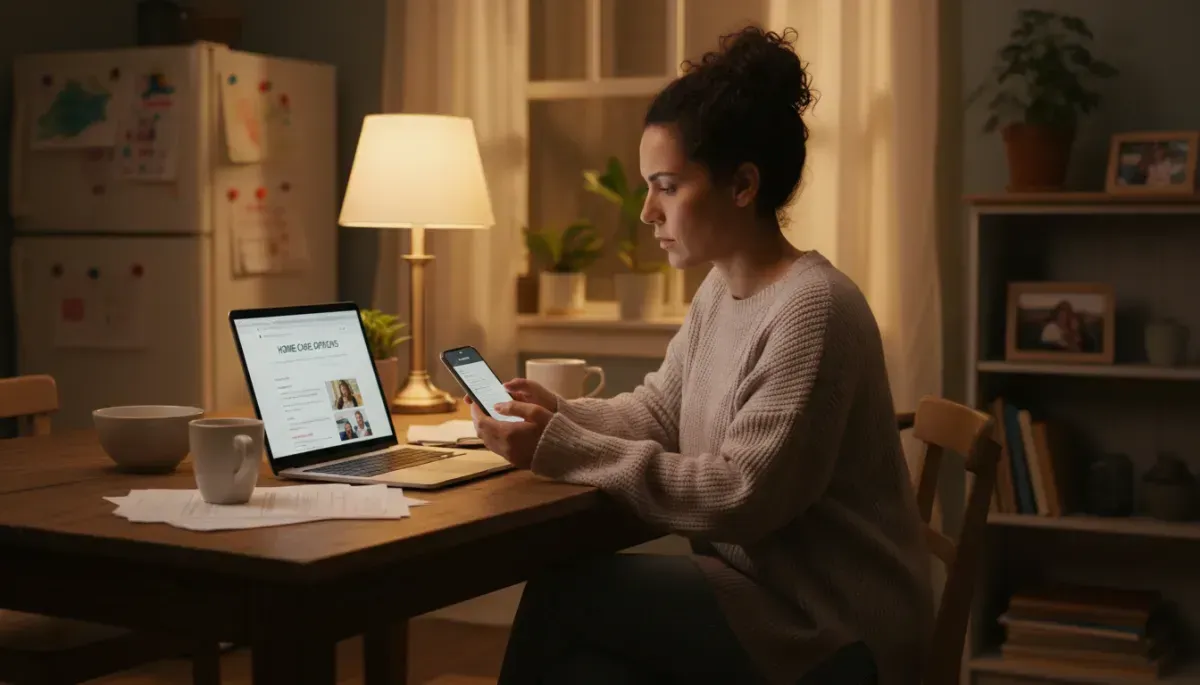
Picture the daughter of a new potential client. It is 10:30 p.m. Her mom has fallen twice this month. The hospital is nudging for a discharge plan. She opens Google, types “home care near me,” and starts scrolling. In that moment, she is not comparing clinical outcomes or caregiver training hours. She is reacting to what she sees on the screen in front of her, your online first impression.
Before she ever dials your number, she is already making decisions based on:
Whether your agency appears on the first page of Google at all
How professional and up to date your website looks on her phone
If your message speaks to her situation or just lists services and buzzwords
The number of Google reviews and star rating next to your agency’s name
Many agency owners still believe, “If families would just talk to us, they would choose us.” The hard truth is that in 2026, most families never get that far. They make a short list, or even a final decision, based on search results, website feel, and reviews. If your online presence looks dated, confusing, or hard to trust, you are losing patients long before your intake coordinator ever has a chance to shine.
💡 Gentle reminder: Families are not judging your heart for care. They are judging what they can see, your website, your Google profile, and your reviews.
2. The Speed Problem: Why Minutes Matter More Than You Think
Even when a family does decide to reach out, another silent deal breaker shows up: response time. Research from Sage Care shows that 81% of families expect a response within one hour of their initial inquiry, and 41% expect to hear back in just 15 minutes. Yet in reality, 44% of families say they waited days for a response, and 15% never heard back at all (sagecare.ai, 2026).
Outside of home care, broader home service data backs this up: businesses that respond within 5 minutes are up to 21 times more likely to qualify a lead than those that wait 30 minutes or more, and an estimated 78% of customers hire the first responder (customerflows.com, 2026). The same “first responder advantage” absolutely applies when a family is in crisis and calling for help at home.
The old “5 minute rule” still holds: if you can follow up within five minutes of an online form or voicemail, you dramatically increase your chances of converting that inquiry into an assessment. Top performing agencies today are responding within 15 to 30 minutes during business hours (sagecare.ai, 2026). Anything beyond two hours becomes a serious competitive disadvantage, because by then, that same daughter has probably contacted three other agencies and already booked an assessment with one of them.
📌 Key takeaway: Speed is not about being “salesy.” It is about meeting families in their moment of anxiety, when they are most ready and most relieved to talk.
3. The Reputation Problem: Google Reviews as the New Word of Mouth
For years, home care grew on referrals and word of mouth. That is still important, but now, word of mouth has moved online. Google reviews are often the first “conversation” a family has about your agency, before they ever speak to your team. Industry articles show that online reviews are one of the most powerful trust signals in home care, heavily influencing which agencies families even consider (HomeCare Magazine, Home Care Pulse, 2023 to 2024).
A handful of recent, specific, heartfelt reviews can do more to calm a worried son or daughter than any brochure. On the other hand, a low star rating, outdated reviews, or silence on your profile can quietly steer families away. Many will never tell you, “We chose another agency because your Google reviews worried us,” they will just click the next listing that feels safer.
High rating and detailed stories = “This agency is consistent and caring.”
Mixed or few reviews = “I am not sure I can trust them with my parent.”
Owner responses to reviews = “They pay attention and take responsibility.”
💡 Pro Tip: Make asking for reviews part of your discharge or milestone process. Families who feel supported are often grateful to share their experience, you just have to ask and make it easy.
4. What a High Converting Online Presence Actually Looks Like
So what does it really mean to have an online presence that does not just look nice, but actually converts anxious website visitors into scheduled assessments and new clients? In 2026, high converting home care agencies tend to share a few practical traits:
Clear, mobile friendly website: Simple navigation, large fonts, and pages that load quickly on a phone. Services, coverage areas, pricing guidance, and “How it works” are easy to find in two clicks or less.
Human, empathetic messaging: Copy that sounds like you are talking to a worried family member, not a hospital administrator. Phrases like “We help you keep mom safe at home” land better than generic lists of tasks.
Trust signals everywhere: Prominent Google review score, testimonials with first names and relationships, photos of real caregivers and clients (with consent), and any accreditations or community partnerships.
Fast, simple ways to reach you: Click to call buttons, short inquiry forms, and live chat or messaging that clearly state response expectations (for example, “We respond within 15 minutes during business hours.”).
Consistent follow up systems: Behind the scenes, there is a defined process so every web form, voicemail, and chat gets a prompt response and at least three follow up attempts. That is how agencies achieve strong inquiry to client conversion rates above 35% (sagecare.ai, 2026).

Real, relatable visuals help families picture their loved one safe and supported at home.
Bringing It All Together: Great Care Is Not Enough Anymore
If you are reading this, you already care deeply about your clients. You hire thoughtfully. You train your caregivers. You go the extra mile for families once they are on service. But in today’s digital first world, great care alone is not enough if families cannot find you, trust you, or hear back from you quickly online. The agencies that grow are not always the ones with the best caregivers, they are the ones whose online presence reflects the quality and compassion they deliver in the home.
The good news is that this is fixable. With the right strategy, your website, Google profile, reviews, and response systems can work together like an extra member of your team, warming up families, building trust, and opening the door for your intake staff to do what they do best: listen, reassure, and guide people toward safe, dignified care at home.
Is your agency's online presence working as hard as your team is? Get your free marketing audit at virtualmonarch.com and find out exactly where you stand.